
Post
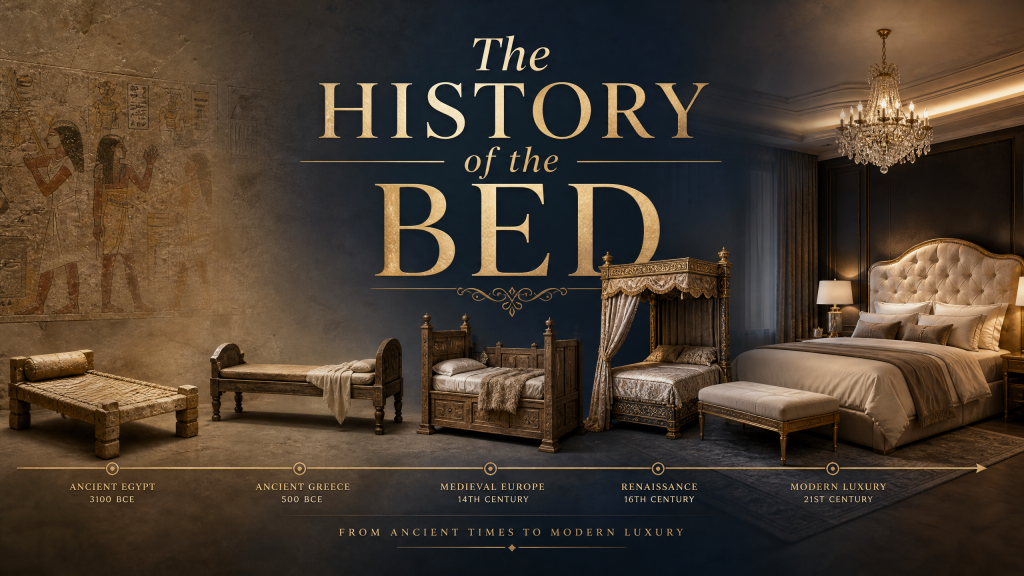
The History of the Beds: From Ancient Times to Modern Luxury
Jun
The History of the Bed: From Ancient Times to Modern Luxury
The bed is one of the most important inventions in human history. While often taken for granted, this essential piece of furniture has played a central role in human comfort, health, and daily life for thousands of years. Every civilization, from prehistoric communities to modern societies, has sought ways to improve sleeping conditions and create spaces dedicated to rest and recovery.
Today, beds are available in countless styles, sizes, and technological configurations. From luxurious upholstered frames and memory foam mattresses to adjustable smart beds equipped with sleep-tracking capabilities, modern consumers enjoy a level of sleeping comfort unimaginable to earlier generations. However, the journey from primitive sleeping surfaces to sophisticated sleep systems is a fascinating story that reflects the broader evolution of human civilization.
The history of the bed reveals not only advancements in furniture design and manufacturing but also changing attitudes toward privacy, social status, health, and personal comfort. By exploring how beds have evolved over time, we gain a deeper appreciation for one of humanity’s oldest and most indispensable pieces of furniture.
The Earliest Beds: Prehistoric Beginnings
Long before the development of cities, agriculture, or written language, early humans recognized the importance of creating designated sleeping areas. Archaeological discoveries suggest that humans have been constructing sleeping surfaces for at least 77,000 years.
One of the most significant discoveries occurred at Sibudu Cave in South Africa, where researchers uncovered layers of plant materials arranged specifically for sleeping. These ancient beds consisted of grasses, reeds, and leaves that were carefully selected and layered to provide cushioning and insulation from the cold ground.
Interestingly, evidence suggests that prehistoric humans regularly replaced these plant materials and occasionally burned old bedding to eliminate pests and maintain cleanliness. This demonstrates an early understanding of hygiene and comfort that remains relevant today.
These primitive sleeping arrangements represent the first known efforts to improve rest and create healthier living conditions. While simple by modern standards, they laid the foundation for thousands of years of innovation in sleep technology.
The Development of Sleeping Spaces in Early Civilizations
As humans transitioned from nomadic lifestyles to permanent settlements, sleeping arrangements became more sophisticated. The rise of agriculture allowed people to build permanent homes, creating opportunities to develop dedicated sleeping furniture.
Early beds were often simple raised platforms designed to keep sleepers off the cold, damp ground. Elevating the sleeping surface provided protection from insects, dirt, moisture, and small animals.
This shift marked an important milestone in furniture design. For the first time, beds began to emerge as distinct household objects rather than temporary sleeping areas.
Ancient Egypt: Beds as Symbols of Wealth and Status
Ancient Egypt provides some of the earliest examples of recognizable bed frames. Egyptian craftsmen created elevated wooden beds supported by carved legs and often decorated with intricate artwork.
For wealthy Egyptians, beds were much more than functional objects. They served as powerful symbols of status, wealth, and social position.
Members of the royal family and nobility slept on elaborately crafted beds made from imported woods such as cedar and ebony. Many were adorned with gold leaf, ivory inlays, precious stones, and detailed carvings.
One of the most famous examples comes from the tomb of Pharaoh Tutankhamun, where archaeologists discovered several ornate beds that showcased extraordinary craftsmanship and luxury.
Meanwhile, ordinary Egyptians typically slept on simpler wooden frames or woven mats made from reeds and natural fibers.
Egyptians also used wooden headrests instead of pillows. Although they may appear uncomfortable today, these headrests helped keep hairstyles intact and provided neck support while sleeping.
Ancient Greece and the Evolution of Comfort
The ancient Greeks introduced several innovations that influenced bed design for centuries. Greek beds, known as klines, served multiple purposes and were often used for sleeping, relaxing, and dining.
Unlike earlier sleeping platforms, Greek beds featured frames supported by legs and often included woven straps or leather webbing to create a more flexible sleeping surface.
The Greeks also experimented with various mattress fillings, including wool, feathers, straw, and other natural materials. These developments represented significant improvements in comfort compared to previous generations.
In wealthier households, decorative textiles and luxurious bedding became increasingly common, reflecting the growing importance of personal comfort and aesthetics.
The Roman Contribution to Bed Design
The Romans built upon Greek innovations and further advanced the concept of the mattress. Wealthy Romans enjoyed beds with stuffed mattresses filled with feathers, wool, reeds, or hay.
Roman bed frames were often crafted from bronze, wood, or metal and featured decorative carvings and embellishments.
One of the most distinctive aspects of Roman culture was the use of dining couches called triclinia. During formal banquets, guests reclined on cushioned beds while eating and socializing.
This practice demonstrates how beds and bed-like furniture played important social and cultural roles beyond sleeping.
As the Roman Empire expanded, its furniture designs influenced countless regions throughout Europe and the Mediterranean.
The Medieval Period: Practicality and Communal Living
Following the fall of the Roman Empire, Europe entered the medieval period, bringing significant changes to household living arrangements.
During much of the Middle Ages, sleeping arrangements were often communal. Entire families, servants, and household members frequently slept in the same large room or hall.
Most people slept on simple mattresses stuffed with straw and placed directly on wooden platforms or the floor. Privacy was limited, and sleeping quarters were often shared by multiple individuals.
For the nobility, however, beds became increasingly elaborate and valuable. Large wooden frames, decorative carvings, and rich fabrics distinguished aristocratic sleeping chambers from those of ordinary people.
Beds were among the most expensive possessions a family could own and were often included in wills and inheritance records.
The Rise of the Four-Poster Bed
One of the most iconic developments in bed history occurred during the Renaissance and early modern period with the emergence of the four-poster bed.
These impressive structures featured tall posts at each corner supporting a canopy overhead. Heavy curtains surrounded the sleeping area, creating a private and insulated environment.
Four-poster beds served several practical purposes:
- Protection from cold drafts in unheated homes.
- Increased privacy in shared living spaces.
- Improved warmth during winter months.
- Display of wealth and social status.
The finest examples were handcrafted by skilled artisans and featured elaborate carvings, luxurious fabrics, and intricate details.
One famous example is the Great Bed of Ware, built around 1590 in England. Measuring over ten feet square, it became a symbol of extravagance and remains one of the most famous beds in history.
The Industrial Revolution: Making Beds Accessible
The Industrial Revolution transformed virtually every aspect of manufacturing, including furniture production.
Advances in machinery allowed beds to be produced more efficiently and affordably than ever before. As a result, comfortable sleeping furniture became accessible to the growing middle class.
During the nineteenth century, iron bed frames gained popularity due to their durability, affordability, and resistance to pests such as bedbugs.
Mass production also standardized mattress manufacturing, improving consistency and quality.
The Invention of the Innerspring Mattress
One of the most significant innovations in sleep technology occurred in the late nineteenth century with the introduction of the innerspring mattress.
Steel coils provided support while improving comfort and durability compared to traditional straw-filled mattresses.
The innerspring mattress quickly became the industry standard and remained the dominant mattress type for much of the twentieth century.
Manufacturers continuously refined coil systems, cushioning materials, and support structures to enhance sleeping comfort.
The Twentieth Century: A New Focus on Sleep Science
As scientific understanding of health and sleep improved, mattress manufacturers began focusing more heavily on ergonomics and support.
Research revealed the importance of spinal alignment, pressure relief, and sleep quality, leading to significant advancements in mattress design.
Throughout the twentieth century, consumers gained access to:
- Improved innerspring systems.
- Foam cushioning layers.
- Pillow-top mattresses.
- Adjustable bed mechanisms.
- Enhanced bedding materials.
Beds increasingly became tools for promoting health and wellness rather than merely providing a place to sleep.
The Arrival of Memory Foam
A major breakthrough occurred in the 1960s when NASA developed memory foam to improve cushioning and impact absorption for astronauts.
Decades later, the technology entered the consumer market and revolutionized the mattress industry.
Memory foam responds to body heat and pressure, conforming closely to the sleeper’s shape. This provides exceptional pressure relief and motion isolation.
Today, memory foam remains one of the most popular mattress materials worldwide and is available in countless variations and combinations.
The Modern Bed: Luxury Meets Technology
Modern consumers enjoy an unprecedented range of sleeping options. Today’s beds combine centuries of craftsmanship with cutting-edge technology.
Contemporary innovations include:
- Smart beds with sleep tracking capabilities.
- Adjustable bases for personalized comfort.
- Temperature-regulating mattresses.
- Hybrid mattress constructions.
- Wireless controls and smartphone integration.
- Anti-snore positioning systems.
- Customizable firmness settings.
These advancements allow individuals to tailor their sleep experience to their specific preferences and health needs.
At the same time, traditional craftsmanship remains highly valued. Solid wood bed frames, upholstered headboards, and handcrafted furniture continue to be popular among homeowners seeking timeless elegance.
The Future of Bed Design
The future of sleep technology promises even greater personalization and innovation.
Researchers are exploring artificial intelligence, biometric monitoring, and advanced materials that can automatically adjust support, temperature, and firmness throughout the night.
Sustainability is also becoming a major focus, with manufacturers increasingly using eco-friendly materials, responsible sourcing practices, and recyclable components.
As our understanding of sleep continues to evolve, beds will likely become even more sophisticated tools for promoting health, wellness, and overall quality of life.
Conclusion
The history of the bed is a remarkable journey spanning tens of thousands of years. From prehistoric grass bedding and ancient Egyptian wooden frames to Renaissance four-poster masterpieces and today’s technologically advanced sleep systems, the evolution of the bed reflects humanity’s ongoing pursuit of comfort, health, and better living.
Each era introduced innovations that improved the sleeping experience and helped shape the furniture we know today. Modern beds combine the lessons of history with contemporary design and technology, offering levels of comfort and support that previous generations could scarcely imagine.
Whether you prefer the timeless beauty of a traditional wooden bed frame or the advanced features of a smart adjustable sleep system, every modern bed carries the legacy of thousands of years of human ingenuity. Explore our collection of premium beds and bedroom furniture to discover how centuries of innovation can help you enjoy the perfect night’s sleep.
