
Post
Platform Beds vs. Traditional Frames: A Detailed Comparison
Jun
Platform Beds vs. Traditional Frames: A Detailed Comparison
When shopping for a new bed, one of the most important decisions you will make is choosing between a platform bed and a traditional bed frame. While both serve the same fundamental purpose of supporting your mattress and providing a comfortable place to sleep, they differ significantly in terms of structure, appearance, mattress compatibility, cost, maintenance, and overall sleeping experience. Understanding these differences can help you make a confident purchasing decision and ensure that your new bed perfectly matches your lifestyle, comfort preferences, and bedroom design.
Over the past decade, platform beds have surged in popularity due to their sleek appearance and compatibility with modern mattress technologies. At the same time, traditional bed frames continue to remain a trusted favorite among homeowners who appreciate their classic style and elevated sleeping position. Neither option is universally better; rather, each offers distinct advantages that appeal to different types of sleepers.
What Is a Platform Bed?
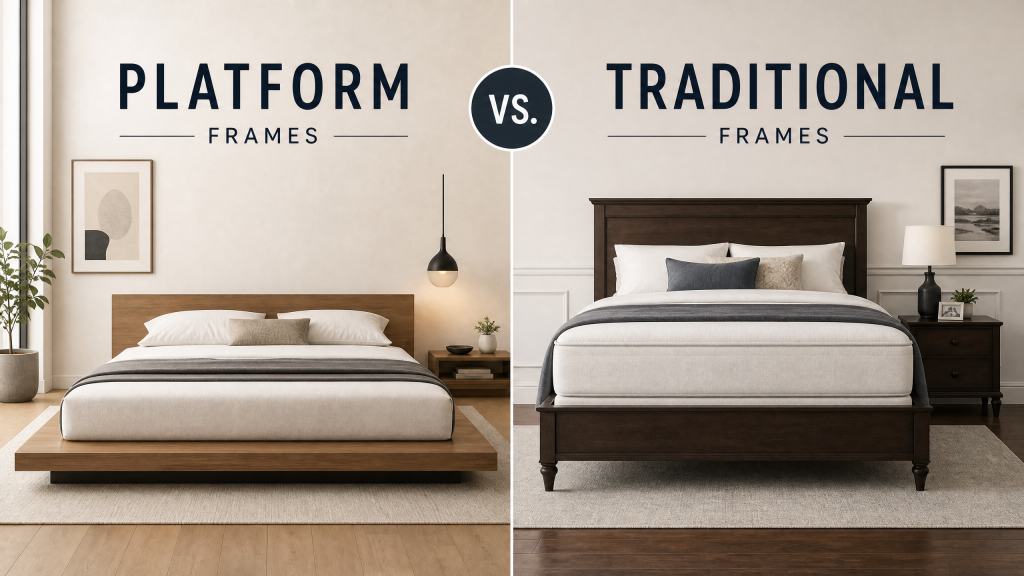
A platform bed is a bed frame that features a built-in support system designed to hold a mattress directly without requiring a box spring. The support surface may consist of solid panels, wooden slats, metal slats, or a combination of materials engineered to distribute weight evenly across the mattress.
Most platform beds have a lower profile than traditional beds, creating a clean and contemporary appearance. The mattress sits directly on the support system, which eliminates the need for additional foundations and simplifies the overall bed setup.
Platform beds are available in a wide variety of styles, including:
- Minimalist platform frames
- Scandinavian-inspired wood designs
- Upholstered platform beds
- Storage platform beds
- Floating platform beds
- Industrial metal platform frames
Their versatility makes them one of the most popular choices in modern interior design.
What Is a Traditional Bed Frame?
A traditional bed frame is designed to support both a mattress and a box spring. The frame itself generally consists of metal rails, support beams, and legs that elevate the sleeping surface above the floor.
The box spring serves as the primary support structure beneath the mattress, helping distribute weight while adding height and a slight degree of flexibility to the sleeping surface. Traditional bed frames often include decorative headboards, footboards, and rails that create a more formal and classic bedroom appearance.
Traditional bed frames are commonly associated with:
- Classic bedroom furniture collections
- Traditional and transitional interiors
- Luxury master bedrooms
- Vintage-inspired designs
- High-profile sleeping surfaces
For generations, this style represented the standard bed setup found in most homes.
Box Spring: Required or Optional?
The most significant difference between platform beds and traditional frames is the role of the box spring.
Traditional bed frames generally require a box spring because the frame itself lacks a solid support surface. Without the box spring, the mattress may not receive adequate support, leading to premature wear and reduced comfort.
Platform beds, on the other hand, eliminate the need for a box spring entirely. The built-in slat system or solid platform provides direct support for the mattress.
There are several benefits to eliminating the box spring:
- Lower overall cost
- Fewer components to purchase
- Simpler assembly
- Improved mattress stability
- Reduced overall bed height
Because of these advantages, many modern mattress manufacturers specifically design their products to be used with platform beds.
Height and Accessibility
Bed height can have a major impact on both aesthetics and functionality.
Platform beds generally position the mattress between 18 and 24 inches from the floor. This lower profile creates a sleek, modern look that many homeowners find visually appealing. Lower beds can also make a room appear larger by creating more open vertical space.
Traditional bed frames, when combined with a box spring and mattress, typically position the sleeping surface between 25 and 36 inches above the floor. This higher profile creates a more substantial presence in the room and can make getting in and out of bed easier for certain individuals.
People who often prefer higher beds include:
- Taller adults
- Older adults
- Individuals with mobility limitations
- Those who dislike sitting close to the floor
Conversely, platform beds are often favored by younger homeowners, modern design enthusiasts, and people who appreciate a more minimalist aesthetic.
Mattress Compatibility
Mattress compatibility is another crucial factor when comparing these two bed styles.
Platform beds work exceptionally well with modern mattress technologies, including:
- Memory foam mattresses
- Latex mattresses
- Hybrid mattresses
- High-density foam mattresses
The even support provided by platform slats helps prevent sagging and ensures optimal mattress performance.
Traditional bed frames are historically associated with:
- Innerspring mattresses
- Pocket coil mattresses
- Traditional pillow-top mattresses
While many modern mattresses can be used on either frame type, always check the manufacturer’s support requirements before purchasing.
Storage Potential
One area where platform beds often excel is storage functionality.
Many platform bed designs incorporate built-in storage solutions such as:
- Under-bed drawers
- Lift-up ottoman compartments
- Integrated shelving
- Bookcase headboards
These features can significantly increase storage capacity without requiring additional furniture.
Traditional bed frames typically offer open space beneath the bed. While this area can still be used for storage bins and containers, it lacks the integrated organization systems commonly found in storage platform beds.
Aesthetic Differences
The visual appearance of your bed has a significant impact on your bedroom’s overall atmosphere.
Platform beds are characterized by:
- Clean lines
- Minimalist silhouettes
- Contemporary styling
- Low-profile appearance
- Architectural simplicity
These qualities make them ideal for:
- Modern interiors
- Scandinavian design
- Industrial spaces
- Minimalist homes
- Urban apartments
Traditional bed frames typically feature:
- Decorative headboards
- Footboards
- Elevated profiles
- Classic proportions
- Formal appearance
They complement:
- Traditional interiors
- Farmhouse bedrooms
- Transitional spaces
- Luxury master suites
- Classic furniture collections
Durability and Structural Integrity
Both platform beds and traditional frames can offer exceptional durability when manufactured from high-quality materials.
For platform beds, look for:
- Solid hardwood construction
- Heavy-duty metal frames
- Closely spaced slats
- Center support legs
- Reinforced corner joints
For traditional frames, prioritize:
- Steel support rails
- Heavy-duty center beams
- Strong hardware connections
- Quality box spring support systems
- Reinforced frame construction
Proper construction quality is far more important than the style itself when evaluating long-term durability.
Cost Comparison
Budget-conscious shoppers should consider the total cost of ownership.
Platform beds often provide better value because they eliminate the need for a separate box spring. Although some premium platform beds carry higher upfront costs, they may still be less expensive overall once the box spring expense is removed.
Traditional frames may initially appear less expensive, but the additional cost of purchasing a quality box spring can increase the total investment significantly.
When comparing prices, always calculate the complete system cost rather than evaluating the frame alone.
Maintenance and Cleaning
Platform beds generally require minimal maintenance. Regular dusting and periodic tightening of hardware are usually sufficient.
Traditional bed setups involve one additional component—the box spring—which can accumulate dust over time and may eventually require replacement.
Because platform beds sit lower to the ground, however, cleaning underneath them may sometimes be more challenging depending on the design.
Which Option Is Right for You?
The ideal choice depends on your individual needs and preferences.
A platform bed may be the better option if you:
- Prefer modern design.
- Use a memory foam or hybrid mattress.
- Want integrated storage.
- Prefer a lower sleeping profile.
- Want to avoid purchasing a box spring.
A traditional frame may be the better choice if you:
- Prefer a classic bedroom aesthetic.
- Like a higher sleeping surface.
- Use a traditional innerspring mattress.
- Want a more formal furniture style.
- Value the familiar feel of a box spring setup.
Conclusion
Both platform beds and traditional bed frames offer unique advantages that can contribute to a comfortable and stylish bedroom. Platform beds provide modern aesthetics, streamlined construction, and excellent compatibility with today’s mattress technologies. Traditional frames offer timeless appeal, elevated comfort, and the familiar support system that many sleepers have enjoyed for decades.
By carefully considering factors such as mattress type, room design, storage needs, budget, and personal comfort preferences, you can confidently choose the bed foundation that best supports your ideal sleep experience. Explore our extensive collection of platform beds and traditional bed frames to discover the perfect centerpiece for your bedroom.
