
Post
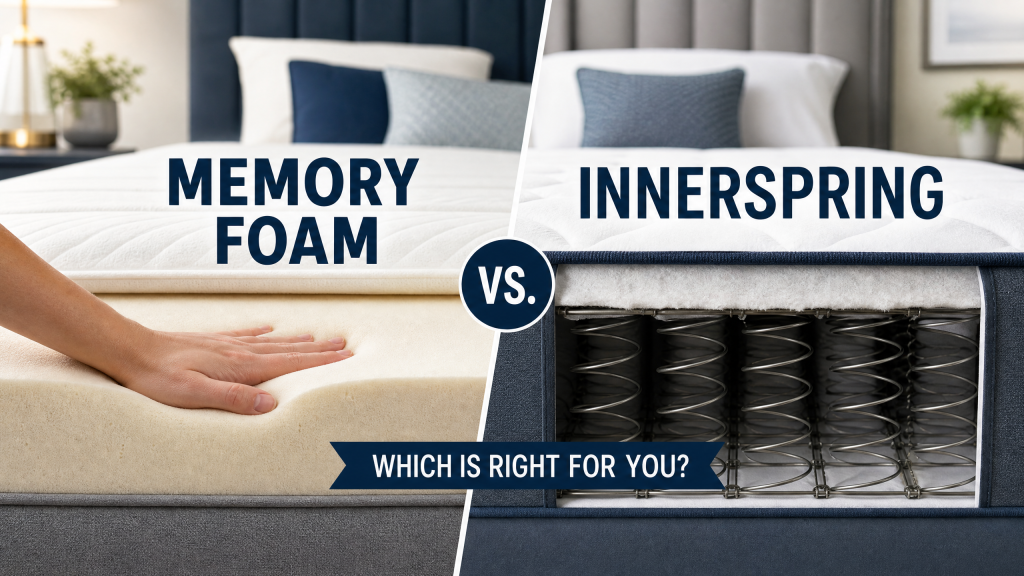
Memory Foam vs. Innerspring Beds: Which Is Right for You?
Jun
Memory Foam vs. Innerspring Beds: Which Is Right for You?
Choosing a new mattress is one of the most important investments you can make for your health, comfort, and overall quality of life. Since most people spend approximately one-third of their lives sleeping, the mattress you choose plays a major role in determining how rested, energized, and comfortable you feel each day. Among the countless mattress options available today, two of the most popular choices continue to dominate the market: memory foam mattresses and innerspring mattresses.
Both mattress types have earned loyal followings over the years, and each offers unique advantages that appeal to different types of sleepers. While memory foam is celebrated for its contouring comfort and pressure relief, innerspring mattresses remain popular for their traditional feel, breathability, and responsive support. Understanding the differences between these mattress technologies can help you make an informed decision that aligns with your sleeping habits, comfort preferences, and budget.
This comprehensive guide explores the construction, benefits, drawbacks, durability, comfort levels, and ideal users for both memory foam and innerspring mattresses so you can determine which option is best suited to your needs.
Understanding the Importance of Mattress Selection
Before comparing mattress types, it is important to understand why choosing the right mattress matters so much. A mattress does far more than simply provide a surface for sleeping. It supports your body, maintains spinal alignment, relieves pressure points, regulates temperature, and affects sleep quality throughout the night.
An unsuitable mattress can contribute to:
- Back pain and neck discomfort.
- Poor sleep quality.
- Frequent waking during the night.
- Joint stiffness.
- Excessive tossing and turning.
- Fatigue during the day.
Selecting the right mattress type can significantly improve both your sleep experience and overall well-being.
What Is Memory Foam?
Memory foam was originally developed by NASA during the 1960s as part of a project to improve cushioning and crash protection for aircraft seating. Engineers sought a material that could absorb impact while providing superior support under pressure.
The result was viscoelastic polyurethane foam, now commonly known as memory foam. Over time, this innovative material found its way into the consumer market and eventually revolutionized the mattress industry.
Memory foam responds to body heat and pressure by softening and conforming to the sleeper’s shape. When pressure is removed, the material slowly returns to its original form, creating the signature “memory” effect that gives the material its name.
How Memory Foam Mattresses Work
When you lie on a memory foam mattress, your body heat softens the foam in areas where pressure is applied. The foam molds around your body’s contours, creating personalized support that distributes weight evenly across the sleeping surface.
Unlike traditional spring systems that push back against the body, memory foam cradles the sleeper and minimizes concentrated pressure points.
This contouring effect helps maintain proper spinal alignment while reducing stress on the shoulders, hips, knees, and lower back.
Benefits of Memory Foam Mattresses
Exceptional Pressure Relief
One of the primary reasons people choose memory foam is its outstanding pressure-relieving capability.
The material conforms closely to the body, reducing pressure on sensitive joints and muscles. This can be particularly beneficial for:
- Side sleepers.
- People with arthritis.
- Individuals with chronic pain.
- Those recovering from injuries.
Superior Motion Isolation
Memory foam excels at absorbing movement.
If one person moves, changes position, or gets out of bed during the night, the foam minimizes motion transfer across the mattress surface.
This feature makes memory foam particularly attractive for couples.
Spinal Support
Because memory foam adapts to body shape, it helps maintain healthy spinal alignment.
Proper alignment can reduce discomfort and support healthier sleep posture.
Quiet Sleep Surface
Unlike some traditional spring mattresses, memory foam produces virtually no noise.
There are no coils to squeak or creak, creating a quieter sleep environment.
Allergy-Friendly Properties
Memory foam’s dense structure makes it resistant to dust mites and other common allergens.
This can be beneficial for individuals with allergies or respiratory sensitivities.
Potential Drawbacks of Memory Foam
Heat Retention
Traditional memory foam is known for retaining body heat.
Although modern cooling technologies have significantly improved temperature regulation, some sleepers still find memory foam warmer than innerspring alternatives.
Slow Response Time
The same contouring characteristic that provides comfort can make movement feel slightly restricted.
Some sleepers describe memory foam as creating a “hugging” sensation that may not appeal to everyone.
Higher Initial Cost
High-quality memory foam mattresses often cost more than entry-level innerspring models.
However, many buyers consider the additional comfort and durability worthwhile investments.
What Is an Innerspring Mattress?
Innerspring mattresses are the most traditional mattress design and have been a staple of the bedding industry for more than a century.
These mattresses rely on a support core composed of metal coils or springs. Layers of cushioning materials are placed above the coil system to provide comfort.
Although the basic concept remains unchanged, modern innerspring mattresses have evolved significantly through advances in coil technology and comfort materials.
How Innerspring Mattresses Work
The primary support mechanism in an innerspring mattress comes from its coil system.
When weight is applied, the coils compress and distribute pressure throughout the mattress structure. Different coil configurations create varying levels of support, firmness, responsiveness, and durability.
Common coil types include:
- Bonnell coils.
- Continuous coils.
- Offset coils.
- Pocketed coils.
Pocketed coils are particularly popular because they move independently, providing more targeted support and reduced motion transfer.
Benefits of Innerspring Mattresses
Excellent Airflow
One of the biggest advantages of innerspring mattresses is their breathability.
The open space between coils allows air to circulate freely throughout the mattress, helping dissipate heat.
This makes innerspring mattresses a popular choice for hot sleepers.
Responsive Support
Innerspring mattresses offer a more responsive and buoyant sleeping surface.
Many sleepers enjoy the feeling of sleeping “on” rather than “in” the mattress.
The responsive support also makes changing positions easier during the night.
Strong Edge Support
Many innerspring models provide excellent edge support.
This allows sleepers to use the full surface area of the mattress without experiencing excessive compression near the edges.
Affordability
Traditional innerspring mattresses are often available at lower price points compared to premium memory foam options.
This affordability makes them attractive to budget-conscious shoppers.
Wide Variety of Firmness Options
Innerspring mattresses are available in a broad range of firmness levels, making it easier for consumers to find a model that suits their preferences.
Potential Drawbacks of Innerspring Mattresses
Reduced Pressure Relief
Compared to memory foam, innerspring mattresses generally provide less contouring and pressure relief.
Side sleepers may experience increased pressure on their shoulders and hips.
Motion Transfer
Traditional coil systems can transfer movement across the mattress.
Although pocketed coils improve motion isolation, memory foam still performs better in this area.
Noise Over Time
As innerspring mattresses age, coils may begin to squeak or creak.
This issue varies depending on mattress quality and construction.
Potential Sagging
Lower-quality innerspring mattresses may develop sagging or body impressions over time, particularly in heavily used areas.
Durability Comparison
Durability is a major consideration when investing in a mattress.
Memory Foam Longevity
High-density memory foam mattresses typically last between 10 and 15 years with proper care.
Premium models often maintain their support and comfort characteristics for many years.
Innerspring Longevity
Most innerspring mattresses last approximately 7 to 10 years, depending on coil quality and materials used.
Higher-end pocketed coil systems generally offer greater durability than traditional open-coil designs.
Which Mattress Is Best for Different Sleep Positions?
Side Sleepers
Memory foam is often considered the superior option for side sleepers because it cushions the shoulders and hips while maintaining spinal alignment.
Back Sleepers
Both mattress types can work well for back sleepers.
The ideal choice depends on personal comfort preferences and firmness requirements.
Stomach Sleepers
Many stomach sleepers prefer firmer innerspring mattresses because they help prevent excessive sinking around the midsection.
Combination Sleepers
Sleepers who frequently change positions often appreciate the responsiveness and ease of movement provided by innerspring mattresses.
Memory Foam vs. Innerspring for Couples
Couples often prioritize motion isolation and comfort.
Memory foam generally performs better in reducing motion transfer, making it ideal for partners with different sleep schedules or restless sleeping habits.
However, couples who sleep hot may prefer the increased airflow of an innerspring mattress.
The Rise of Hybrid Mattresses
Many shoppers find themselves attracted to the benefits of both mattress types. This demand has led to the popularity of hybrid mattresses.
Hybrid mattresses combine:
- Pocketed coil support systems.
- Memory foam comfort layers.
- Enhanced pressure relief.
- Improved airflow.
By blending the strengths of both technologies, hybrid mattresses often provide an excellent balance of comfort, support, and temperature regulation.
Which Mattress Should You Choose?
Choose a memory foam mattress if you:
- Sleep primarily on your side.
- Experience joint or back pain.
- Share a bed with a restless partner.
- Prefer body-contouring comfort.
- Want superior motion isolation.
Choose an innerspring mattress if you:
- Sleep hot.
- Prefer a traditional mattress feel.
- Sleep on your stomach or back.
- Like responsive support.
- Need a more budget-friendly option.
Conclusion
Both memory foam and innerspring mattresses offer valuable benefits, and neither is universally better than the other. The right choice depends on your unique sleep habits, comfort preferences, body type, temperature sensitivity, and budget. Memory foam excels in pressure relief, motion isolation, and contouring comfort, while innerspring mattresses stand out for breathability, responsiveness, affordability, and traditional support.
By carefully evaluating your individual needs and understanding the strengths of each mattress type, you can confidently select a sleep solution that delivers years of comfort and restorative rest. Explore our complete collection of memory foam, innerspring, and hybrid mattresses to find the perfect match for your bedroom and enjoy better sleep every night.
